New Year’s Eve Is a Lie
And Other Dangerous Things We Tell Ourselves at Midnight
Most people treat New Year’s Eve like a promise.
A reset.
A clean slate.
Champagne, fireworks, kisses at midnight, and the comforting belief that when the clock rolls over, something fundamental changes.
It doesn’t.
New Year’s Eve isn’t about beginnings. It’s about denial—loud, glittering denial, wrapped in ritual and noise. Cities flood with people who think rules have loosened, that consequences are taking the night off, and that tomorrow will deal with whatever spills over.
Which makes it a very good night for violence.
Celebrations don’t stop bad things from happening. They hide them. They drown out sound, fracture attention, and give intent somewhere to disappear. Midnight doesn’t cleanse the world. It just gives it better cover.
And if you’re paying attention, New Year’s Eve has always been one of the most dangerous nights on the calendar.
Why Celebrations Are Perfect Cover
Large-scale celebrations follow predictable patterns. Crowds surge and scatter. Security is visible but overstretched. Everyone is watching the same thing at the same time—fireworks, countdowns, spectacle—while everything else slips into the margins.
New Year’s Eve is especially good at this.
It’s transitional. Liminal. People behave as if they’re briefly untethered from consequence. The world feels suspended between “what was” and “what’s coming next,” and that pause is where mistakes—and opportunities—multiply.
If you wanted to vanish into a city, you could do worse than New Year’s Eve at midnight.
Marin Has Always Known This
Marin doesn’t believe in fresh starts. She believes in timing.
Across her assignments, the pattern is consistent: she operates best when the world is distracted by ritual. Valentine’s Day turns intimacy into camouflage. St Patrick’s Day drowns streets in noise and drunken chaos. Easter wraps violence in innocence. Cinco de Mayo hides intent behind celebration and nationalism.
Different holidays. Same principle.
When everyone else is celebrating, Marin is working.
New Year’s Eve isn’t an exception to that pattern—it’s the culmination of it.
Vienna, Midnight, and a Palace Full of Lies
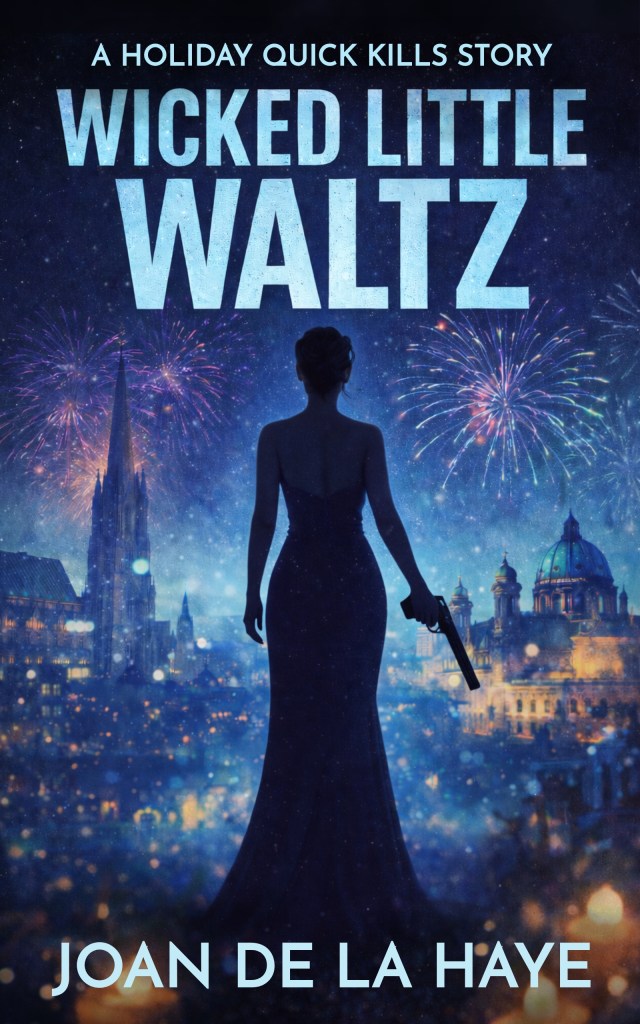
Wicked Little Waltz drops Marin into Vienna on New Year’s Eve, dressed in silk, armed with intent, and hunting a man who believes he’s untouchable.
Dmitri Karpin is a war criminal with diplomatic immunity and a talent for surviving while others don’t. The plan is simple: a palace ball, a clean hit, disappear before the fireworks fade.
Of course, nothing ever stays simple.
As Vienna celebrates in denial and glitter, the job fractures. Karpin runs. Rival killers surface. The night turns into a chase through waltzes, nightclubs, and packed streets where everyone is counting down to midnight and no one is watching closely enough.
That’s the danger of New Year’s Eve. Everyone believes the night belongs to hope. Marin knows it belongs to endings.
Midnight Isn’t Magic. It’s a Deadline.
There’s a particular cruelty to New Year’s Eve: the belief that time itself will do the work for us. That if we just make it to midnight, something will reset. Guilt, consequences, unfinished business—left behind with the old year.
It never works that way.
In Wicked Little Waltz, midnight isn’t a wish. It’s a line in the sand. Someone isn’t supposed to see the new year. And whether that happens cleanly or catastrophically depends on choices made while the city is looking the other way.
Fireworks explode. Music swells. Glasses clink.
And somewhere in the noise, a body drops.
Why This Story Had to End the Year
This isn’t a New Year’s story because it’s festive. It’s a New Year’s story because it understands the lie at the heart of the celebration.
The lie that endings are painless.
The lie that tomorrow fixes what today refuses to face.
The lie that survival equals absolution.
Marin doesn’t buy any of that.
She operates in the margins—between countdowns, behind velvet curtains, under cover of music and light. Vienna’s elegance doesn’t soften the violence. It sharpens it. Silk hides weapons. Glamour distracts witnesses. Midnight becomes a moment people remember fondly, even if they shouldn’t.
A Year Ends. The Pattern Continues.
New Year’s Eve isn’t special because it changes anything. It’s special because it pretends to.
That pretence—the belief in clean breaks and fresh starts—is what makes nights like this dangerous. It’s why celebrations keep showing up as fault lines in Marin’s work. Not because they’re chaotic, but because they’re controlled chaos. Predictable. Exploitable.
This blog will keep returning to those moments throughout the year. Not to celebrate them, but to examine them. To look at what happens when ritual collides with intent, and violence slips through the cracks.
Tonight, the year ends. The fireworks will fade. The champagne will go flat.
And somewhere in Vienna, a man who believes he’s untouchable is mistaken. His time is up—he just hasn’t realised it yet.
Wicked Little Waltz is available now.
New Year’s Eve is about endings.
Marin is very good at those.
 Joan De La Haye